Should You Really Be Taking a Statin? Here's How to Know
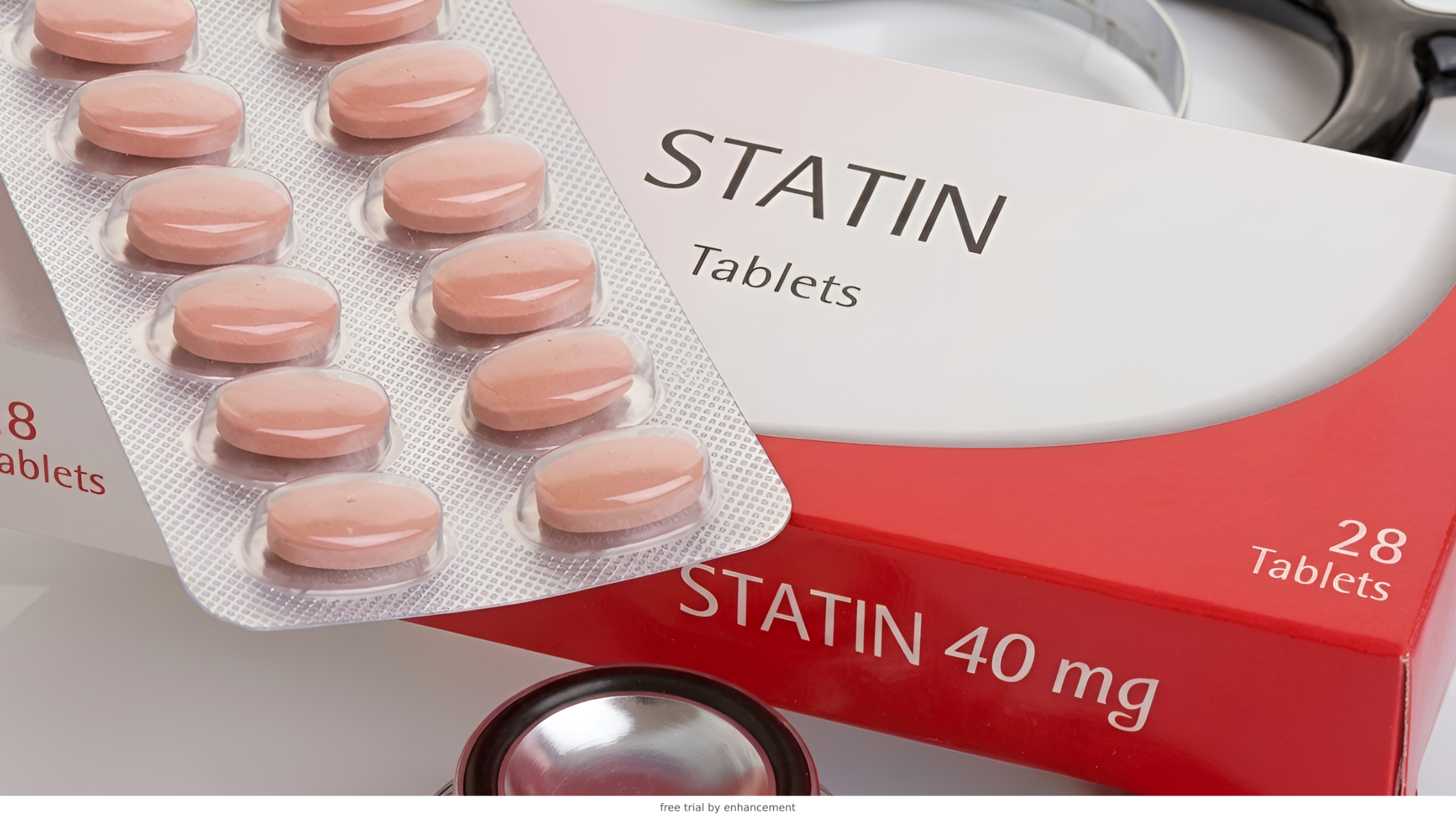
Your cholesterol is high, your doctor mentioned it, and now you're down a Google rabbit hole at midnight. Let's make this clearer.
By Dr. Anushree Kumar, MD — Board-Certified Internist · Menopause Society Certified Practitioner · Vida Family Medicine
You got your labs back. Your LDL is elevated. Maybe your doctor mentioned the word "statin," maybe they said "we'll watch it," or maybe you just Googled "high cholesterol" and now you're reading fourteen conflicting articles. I get it. This comes up almost every day in my practice — and honestly, the confusion is understandable, because the honest answer is: it depends.
But "it depends" doesn't have to mean "I have no idea." There's a clear, evidence-based framework for this decision — and I want to walk you through exactly how I think about it with my patients.
The good news: the 2026 ACC/AHA Guidelines on Dyslipidemia just updated this framework. The tools we use to estimate your risk are now significantly more accurate, which means the recommendations are more personalized to you — not just a population average.
First: what is a statin, and what does it actually do?
Statins are a class of medications that lower LDL cholesterol — often called "bad" cholesterol — by blocking an enzyme your liver uses to produce it. They've been studied for decades, across millions of patients, and their ability to reduce heart attacks and strokes is one of the most robust findings in all of cardiovascular medicine.
They are not perfect. They have side effects worth discussing. But for the right person, at the right risk level, they are genuinely life-saving medications.
So: are you the right person?
Step one: Do you fall into an automatic "yes" category?
Before we even get to calculators and risk scores, there are three situations where statins are pretty clearly indicated — no complex math required.
You've already had a heart attack, stroke, or are living with coronary artery disease. This is called secondary prevention — you're preventing the next event. High-intensity statin therapy is recommended.
Your LDL is ≥190 mg/dL. At this level, the risk from cholesterol itself is significant enough that we don't need a risk calculator. High-intensity statin, full stop.
You have diabetes and your LDL is ≥70 mg/dL (ages 30–79). Diabetes amplifies cardiovascular risk meaningfully — moderate-intensity statin therapy is indicated.
If you fall into any of these buckets, the conversation shifts from "whether" to "which statin, what dose, and what are your goals." That's a different — and honestly more productive — conversation.
Step two: If none of the above apply, we calculate your 10-year risk
For everyone else with an LDL between 70 and 189 mg/dL, the guidelines recommend using something called the PREVENT-ASCVD equations — a new and more accurate set of risk calculators that just replaced the older Pooled Cohort Equations this year.
Why does this matter? The old calculators tended to overestimate risk — sometimes dramatically. The new PREVENT equations are more precise, accounting for current blood pressure treatment, kidney function, and other factors. For the same risk profile, the new equations produce risk estimates that are roughly 40–50% lower. This is why the threshold for considering statins has actually shifted — it now starts at a lower 10-year risk of 3%, because we're being more accurate about who's truly at risk.
Here's how the risk categories break down:
High risk (≥10% 10-year risk): At least moderate-intensity statin recommended. High-intensity statin — aiming for ≥50% LDL reduction — is also reasonable.
Intermediate risk (5–9%): Moderate-intensity statin is reasonable, with a goal of ≥30% LDL reduction. High-intensity is also an option depending on your full picture.
Borderline risk (3–4%): A statin may be reasonable after a shared conversation with your doctor. The closer your risk is to 3%, the smaller the expected benefit.
Low risk (below 3%): Statin generally not indicated on 10-year risk alone — but long-term risk, your cholesterol levels, and other factors still matter.
If your 10-year risk comes back below 3%, that's genuinely reassuring — but it doesn't end the conversation entirely. The new guidelines now also consider 30-year risk, particularly for younger patients whose numbers look okay today but may be on a trajectory worth addressing. If your LDL is ≥160 mg/dL, if you have a strong family history, or if imaging shows early arterial calcium buildup, lipid-lowering therapy may still be appropriate.
Step three: The risk enhancers — what adds nuance to your number
Here's what I love about the way medicine is moving: we're finally getting away from treating everyone like a population average. Your 10-year risk score is a starting point, not the whole story.
When the decision sits in a gray zone — say, your risk is 5% and you're on the fence — we look at what the guidelines call risk enhancers. These are factors that, even when the math doesn't scream "statin now," tip the scales toward treating. They include:
family history of early heart disease, LDL persistently ≥160 mg/dL, metabolic syndrome, chronic kidney disease, a history of preeclampsia, premature menopause, rheumatoid arthritis, psoriasis, HIV, South Asian ancestry, triglycerides ≥175 mg/dL, Lp(a) ≥50 mg/dL, hsCRP ≥2.0 mg/L, and apoB ≥130 mg/dL.
I want to call out a few of these that I think are particularly important for my patients in their 40s and 50s.
For women specifically: premature menopause and preeclampsia
If you went through menopause before age 40, or experienced preeclampsia during pregnancy, your cardiovascular risk profile looks different than a woman who didn't. These are now formally recognized as risk enhancers — meaning they count. If your doctor hasn't asked about your obstetric history or the age of your menopause, make sure to bring it up.
Lp(a) — the underappreciated player
Lipoprotein(a), or Lp(a), is a cholesterol particle that's largely genetically determined — diet and exercise don't move it much. Most people have never had it checked. If your Lp(a) is elevated (≥50 mg/dL), it meaningfully raises your risk even if your LDL looks fine. I check this routinely in patients with a family history of early heart disease or whose risk doesn't match their standard labs.
hsCRP — inflammation matters
A high-sensitivity CRP (hsCRP) ≥2.0 mg/L signals chronic low-grade inflammation — and inflammation is a driver of atherosclerosis independent of cholesterol. If yours is elevated, it tells us something important about your risk that the LDL number alone doesn't capture.
"Your 10-year risk score is a starting point, not the whole story. The best decisions come from looking at your full picture."
The tiebreaker: coronary artery calcium scoring
When I have a patient sitting in the middle — say, a 52-year-old woman with a 6% 10-year risk, a couple of risk enhancers, but no symptoms — and she's ambivalent about starting a medication, I often turn to coronary artery calcium (CAC) scoring.
CAC is a quick, low-radiation CT scan that looks at whether calcium has already built up in your coronary arteries — an early, direct sign of atherosclerosis. It's recommended for men aged 40 and older and women aged 45 and older when the decision is uncertain.
A CAC score of zero is genuinely reassuring — it suggests that even if your LDL is elevated, plaque hasn't started building yet. In that case, we might reasonably hold off on a statin and recheck in a few years.
A CAC score of 100 or above (or at or above the 75th percentile for your age and sex) is a strong argument for starting a statin, even if your calculated risk didn't clearly push us there.
It's one of my favorite tools precisely because it gives us real, individualized information — not a population-based estimate. I find that patients also respond differently to "here's what's actually happening in your arteries" versus "here's a number a calculator produced."
What about side effects? Let's be real.
I won't gloss over this. The most common concern I hear is muscle aches — and yes, some patients do experience this on statins, particularly at higher doses. In most cases, trying a different statin or adjusting the dose resolves it.
And for anyone who's ever heard that statins harm the liver — the current data is more nuanced and reassuring than the old guidance. Statins are no longer contraindicated in people with chronic stable liver disease, including metabolic-associated steatotic liver disease (MASLD, formerly called NAFLD). If you have liver concerns, it's a conversation to have, but it doesn't automatically take statins off the table.
New in 2026: we now also have LDL targets, not just percentage reductions
One shift in the new guidelines that I think is practically useful: in addition to aiming for a percentage reduction in LDL, we now also have specific LDL targets to work toward. For patients in the borderline or intermediate risk category, a goal LDL below 100 mg/dL is now part of the guidance. This makes it easier to track your progress with a number you can follow over time — not just a percentage that requires knowing where you started.
Final thoughts - So, should you take a statin?
If you've read this far, you already know the honest answer is: it depends on your specific risk, your labs, your history, and your preferences. But that answer doesn't have to feel paralyzing.
What I hope you take away from this is that the decision framework is clearer than you might think — and more personalized than it used to be. We're no longer just plugging numbers into a calculator and handing you a prescription. The best conversations I have with patients about statins involve looking at their full picture: their risk score, their enhancers, sometimes their CAC, and their own values and comfort level.
A 48-year-old woman with a 6% 10-year risk, a history of preeclampsia, an Lp(a) of 70, and a CAC of 120 is a different patient than someone with the same LDL and a clean CAC score. Both of those conversations matter — and both deserve more than a rushed five-minute visit.
If you're in your 40s or 50s, now is genuinely the right time to have this conversation — not because something is wrong, but because these are the years when prevention actually moves the needle. What you do now shapes what your arteries look like at 65.
_________________________
Ready to look at your full cardiovascular picture - and make a decision you actually understand?
Schedule a visit with Vida Family Medicine at www.vidafamilymed.com.
This article is intended for general educational purposes and does not constitute personal medical advice. Please consult with your physician to discuss your individual risk and treatment options.